Cangjie tricky character list: exceptions and hard-to-split characters
You can get the Cangjie code for most characters by following the rules, but there are a few exceptions. In some the tangled part is too hard to split stroke by stroke, so Cangjie uses the 難 code (the X key) in its place. Others are exceptions with fixed codes you simply memorize. And some are connected characters that are hard to divide at all. The tables below group common tricky Cangjie characters into these three kinds.
New to the rules? Start with first-code selection →
The 難 code: for parts too tangled to split
When a component is too complex to split stroke by stroke, Cangjie replaces that stretch with the 難 code (the X key).
| Character | Colored | Code | Notes |
|---|---|---|---|
| 身 | 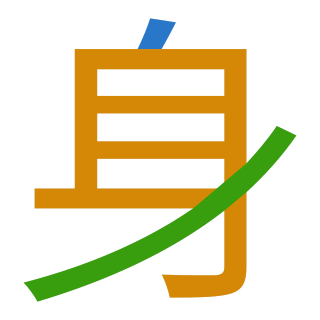 | 竹難竹 | The tangled middle between the two 竹 is the 難 code (X). |
| 臼 |  | 竹難 | The inside is hard to split, so 竹 then the 難 code (X). |
| 肅 | 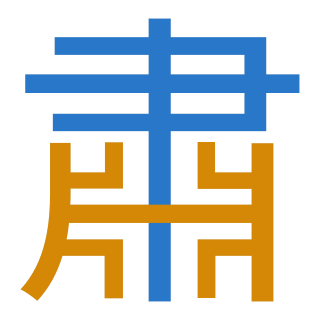 | 中難 | The tangled lower part is the 難 code (X). |
| 慶 | 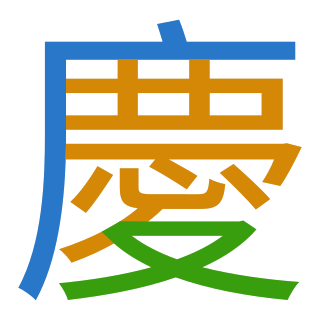 | 戈難水 | The tangled middle is the 難 code (X). |
| 龜 | 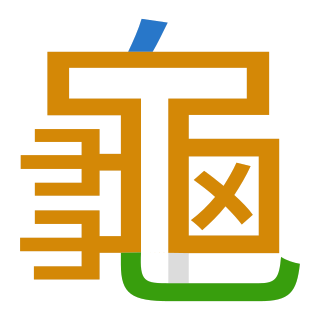 | 弓難山 | The body of 龜 is hard to split, so the middle is the 難 code (X). |
| 鼠 | 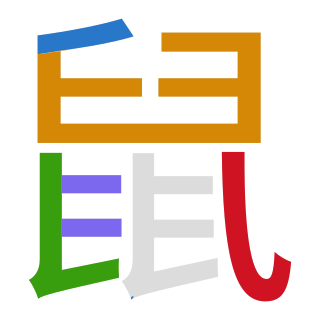 | 竹難女卜女 | The top part is 臼 and follows the same pattern. |
Exceptions with fixed codes you memorize
These characters have fixed, exceptional codes that do not follow the usual splitting. Composite characters take only head and tail; special characters have overlapping parts coded another way.
| Character | Colored | Code | Notes |
|---|---|---|---|
| 門 | 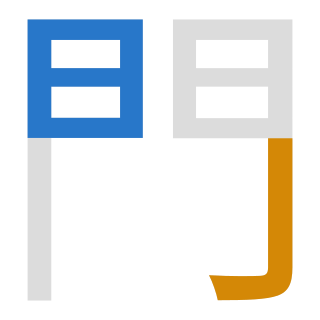 | 日弓 | Take the whole frame as head and tail, not stroke by stroke. |
| 隹 | 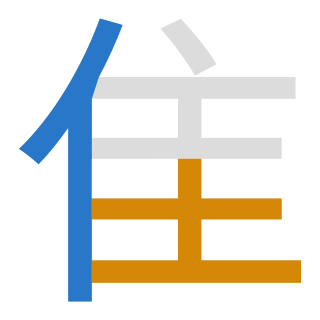 | 人土 | Head and tail only, like 門. |
| 末 | 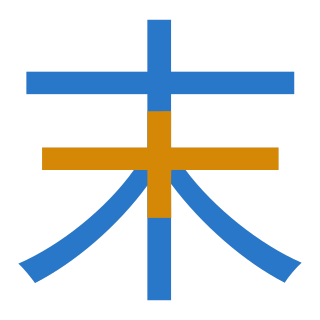 | 木十 | The top stroke is longer, so first 木 then 十. It is the reverse of 未. |
| 未 | 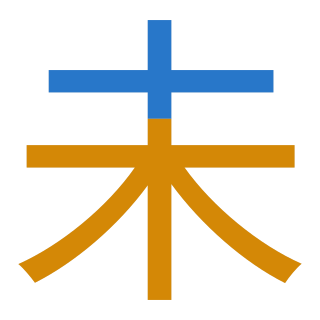 | 十木 | First 十 then 木. It is the reverse of 末. |
| 東 | 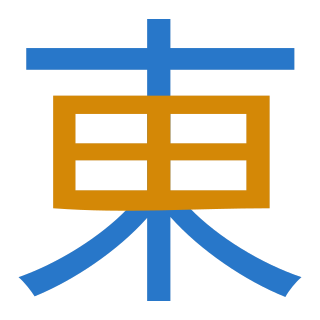 | 木田 | 木 and 田 overlap. |
| 爽 | 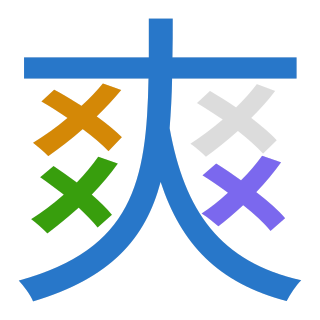 | 大大大大 | Remember that 大 can represent a cross. |
Connected characters you cannot easily split
These characters are written as one connected whole, with strokes that run into each other, so it is hard to see where to cut. Their Cangjie codes are often unintuitive, so it is most practical to learn each one.
| Character | Colored | Code | Notes |
|---|---|---|---|
| 為 | 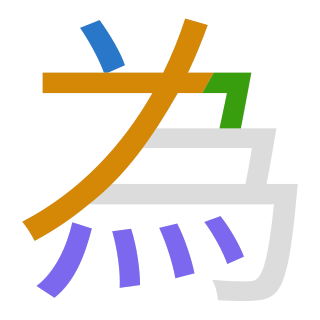 | 戈大弓火 | The top claw strokes are 戈, which is easy to miss. |
| 象 | 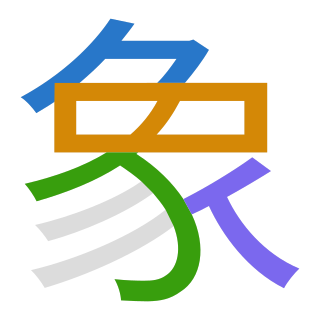 | 弓日心人 | Looks like 豕, but coded differently. |
| 豕 | 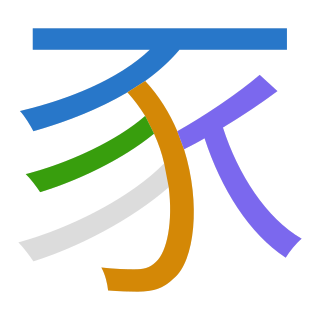 | 一尸竹人 | Looks like 象, but coded differently. |
| 事 | 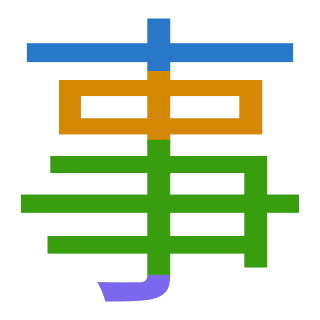 | 十中中弓 | Don't forget 弓 at the bottom. |
| 舟 | 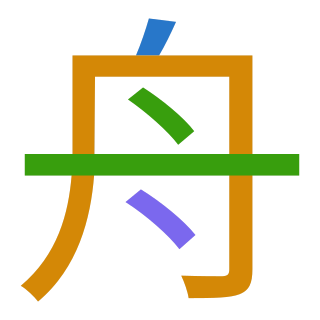 | 竹月卜戈 | Notice how 卜 splits the middle. Similar to 母. |
| 曲 | 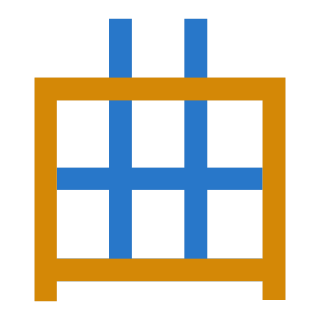 | 廿田 | First 廿 because of the strokes coming out from the top, then 田. |
| 甚 | 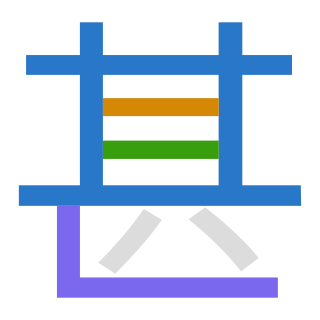 | 廿一一女 | Remember the two 一 in the middle. |
| 母 | 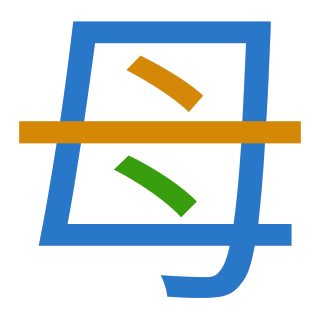 | 田卜戈 | Notice how 卜 splits the middle. Similar to 舟. |